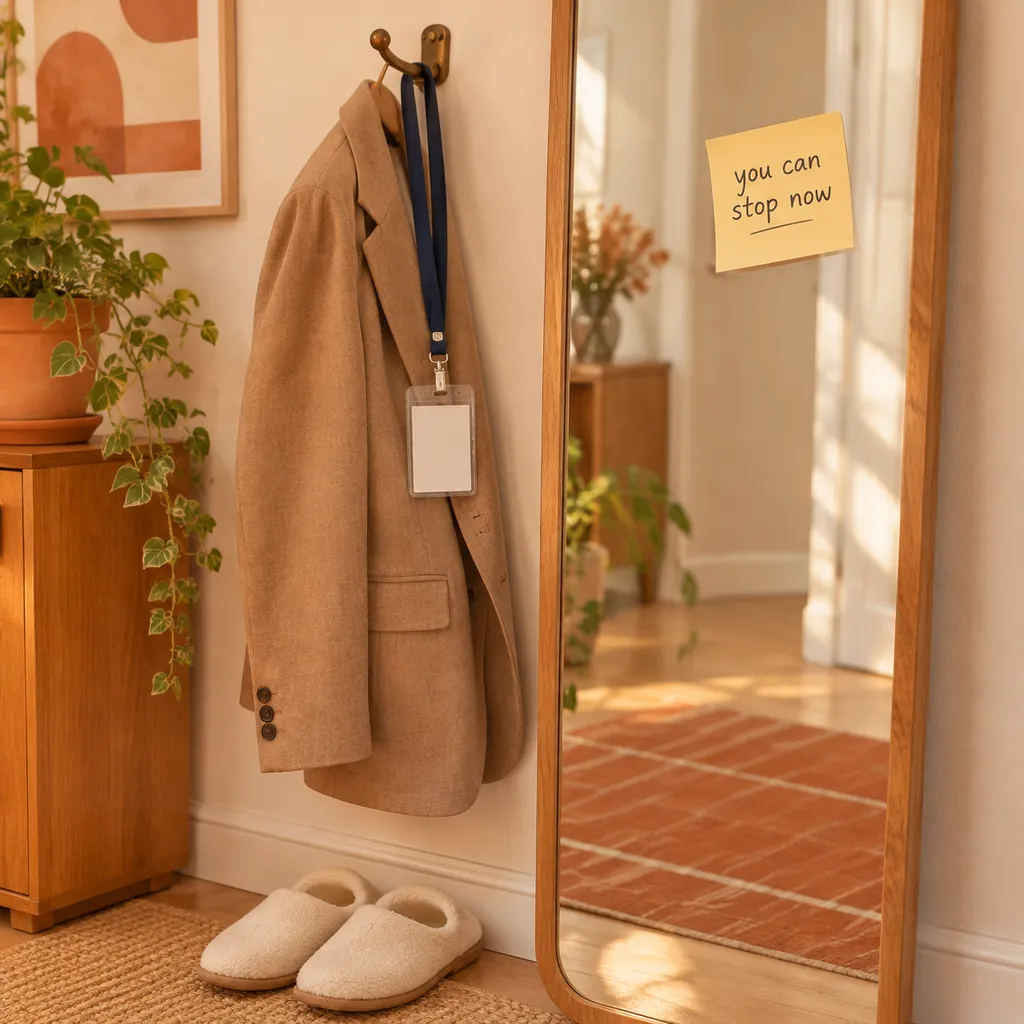

The short version
- Masking means hiding or making up for ADHD traits so you seem to fit in.
- In a Dutch study, adults with ADHD camouflaged more than adults without ADHD, though less than autistic adults.
- Women diagnosed as adults often say masking and other factors hid their ADHD for years.
- Masking works in the short term and costs energy. Choosing where to drop it helps.
The version of you that goes to work
At work you’re on time, you nod at the right moments, and you’ve written every task down twice. Nobody would guess. Then you get home, drop your bag in the hall, and can’t move for an hour.
Sound familiar?
Adults with ADHD often describe masking as running a second programme all day: watching yourself, copying how others act, double-checking everything, sitting still on purpose, laughing at the right time. It often starts in childhood, after being told off for talking too much or losing things. Many people say they only noticed how much they were doing it after a diagnosis.
Maybe you also know these:
- You set five alarms and arrive early, because being late once felt unbearable.
- You rehearse what to say before you join a conversation.
- You keep your hands still in meetings, and fidget wildly afterwards.
- People are surprised when you say you have ADHD, because you “seem so organised”.
If this sounds like you, you’re in good company.
What research says about ADHD and masking
Most research on masking, also called camouflaging, has been about autism. That’s starting to change.
The research bitAdults with ADHD camouflage too
A Dutch study compared 105 adults with ADHD, 105 autistic adults and 105 adults with neither, matched for age and sex. The ADHD group scored higher on camouflaging than the comparison group, mostly on trying to blend in with others. They scored lower than the autistic group [1]. The questionnaire was built for autism, so the authors say it may miss ADHD-specific masking.
The research bitHidden for years
In focus groups with 14 women diagnosed with ADHD as adults, many said they hadn’t recognised their own symptoms, and that several things had hidden their ADHD from them and from doctors. Many had to push hard to be assessed [2].
Masking helps you get through the day. The cost is the energy it takes, which may be part of why so many adults with ADHD feel tired all the time. It can also make ADHD hard to spot, for others and for you. More on that in ADHD isn’t always visible.
Taking the mask off a little
You don’t need to stop masking everywhere. Masking less in a few places can free up a lot of energy.
Try this
- Notice one mask. For a week, write down one thing you do to hide ADHD each day. Just notice, don’t fix.
- Pick a mask-free zone. Home, one friend, one hobby group, where you can fidget, interrupt yourself and lose your train of thought.
- Swap hiding for tools. Instead of pretending to remember, say “let me write that down”. It’s normal, and it’s easier than faking it.
- Plan the after. If a day needs a lot of masking, keep the evening empty.
- Tell one person. Saying “I have ADHD, so I’ll send a summary after the meeting” can make the day lighter.
When it gets heavy
Masking for years can wear you down, and it often comes with anxiety, low mood and burnout. If you feel you’re running on empty, or you never get to be yourself, talk to a doctor or an ADHD service.